MCA Lead Generation Strategies for Brokers: What Actually Works in 2026
June 15, 2026 · MCA Broker Stack

Lead generation is the engine of every MCA business, but the strategies that worked in 2020 are not the same ones winning in 2026. The competitive landscape has shifted significantly — more brokers are active, SMS deliverability has become a technical discipline, and merchants are more informed and more cautious about unsolicited outreach. The shops that build sustainable pipelines today are not relying on a single channel. They are combining the right lead types with the right outreach infrastructure and the discipline to follow up consistently.
This guide breaks down every major lead type in the current market, how to evaluate lead quality before you spend, and how to build a multi-channel system that generates fundable deals month after month.
Understanding the Lead Ecosystem: Not All MCA Leads Are Equal
Before committing budget to any lead source, the most important framework is understanding that lead types are not interchangeable. A UCC lead and a live transfer require completely different scripts, different follow-up timelines, and different conversion expectations. Buying the wrong lead type for your team''s skill set is one of the most common reasons MCA brokers burn through budget without results.
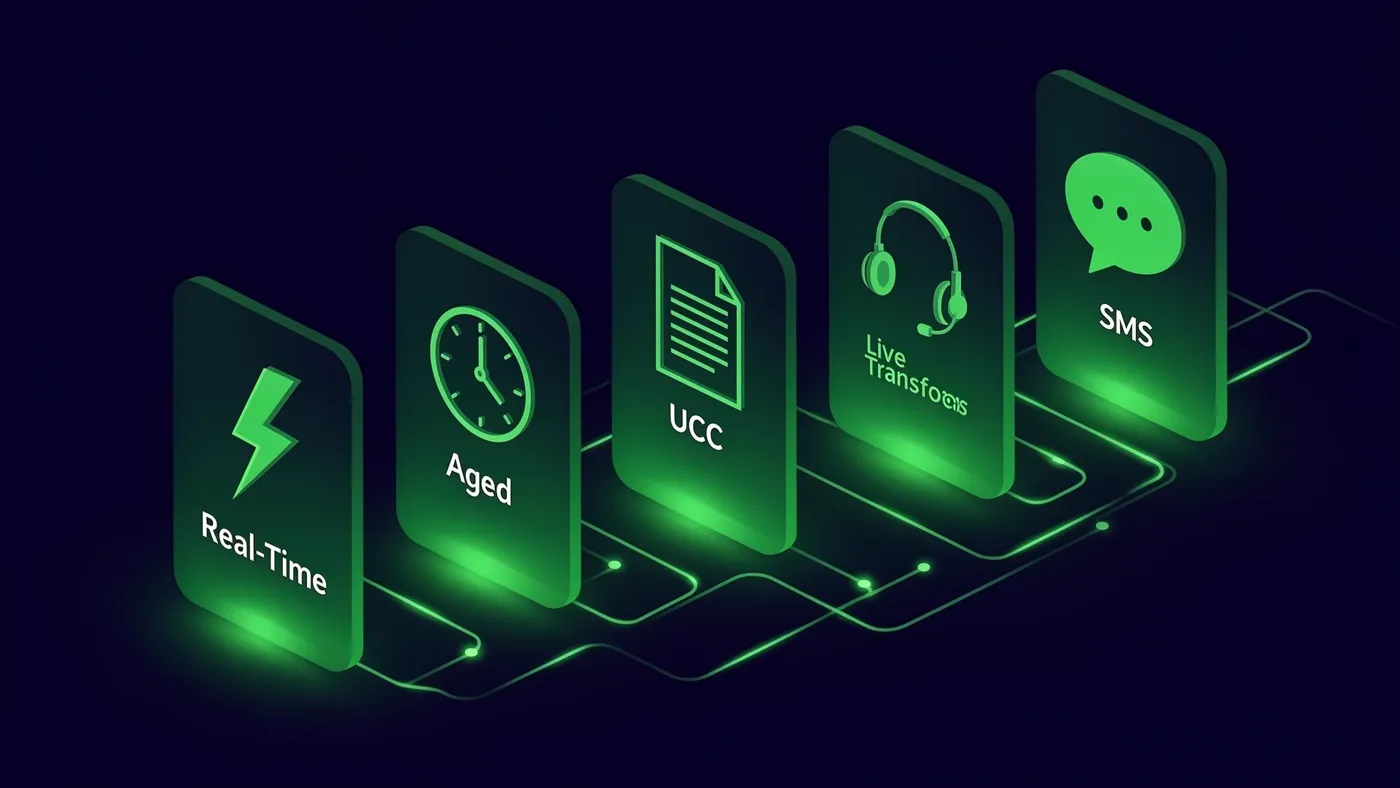
The current market contains five primary lead types, each with distinct characteristics:
1. Real-Time Applications (Fresh Leads)
A merchant who has just filled out a funding application is the highest-intent lead available. They are actively seeking capital right now. Contact within 5 minutes is critical — conversion rates drop by approximately 60% after 2 hours. These leads carry the highest cost per lead but typically the lowest cost per funded deal for teams with fast follow-up infrastructure.
2. Aged Submissions (30–90 Day Leads)
Applications that were not funded in their first cycle. These merchants previously qualified their intent by filling out an application. For brokers with a good follow-up system — power dialer, CRM automation, multi-touch SMS and email — aged leads offer the lowest cost-per-acquisition in the market. The conversion timeline is longer, but the economics are strong for organized shops.
3. UCC Leads
Public UCC filings reveal which businesses have recently taken MCA or commercial financing. A business that filed a UCC-1 related to an MCA in the last 12 months has demonstrated both the willingness and the need to use this type of financing. UCC leads work especially well for renewal offers, additional capital positioning, and consolidation scenarios. They require a more sophisticated outreach approach because the merchant did not raise their hand — the data surfaced them.
4. Live Transfers
A live transfer is a pre-screened merchant who is actively on the phone with a call center agent and has agreed to be transferred to a funding company. These are the closest thing to a warm referral from a paid source. They are the most expensive on a per-lead basis and require fast, skilled closers who can take a live handoff professionally. For the right teams, they close at the highest rate of any paid lead type.
5. SMS / Data Outreach Leads
SMS has become the dominant outreach channel in 2026 as iOS call-blocking has made cold calls harder to land. Data outreach lists filtered by business type, revenue range, and time in business allow targeted SMS campaigns. Open rates for SMS are approximately 90% versus 20–25% for email, making it highly effective for initial contact. The key constraint is compliance with A2P 10DLC registration requirements — unregistered SMS campaigns now face significant deliverability penalties.
The 70/20/10 Starting Framework
For brokers who are new to paid lead generation or evaluating a new provider, a useful starting allocation is:
- 70% fresh shared leads — high intent, broad testing coverage
- 20% UCC leads — long-term pipeline building
- 10% live transfers — benchmark what high-intent conversations sound like
This mix gives you data across lead types without overcommitting to any single source before you have conversion benchmarks.
Evaluating MCA Lead Providers: What to Ask Before You Buy
Never commit to monthly volumes without testing with a small batch of 25–50 leads first. Track cost per funded deal, not cost per lead. A provider charging twice as much per lead but converting at three times the rate is materially cheaper.
Questions to Ask Any Lead Vendor
- How are leads generated? (Web form, phone inquiry, data list, UCC search?)
- What filters are available? (Revenue range, time in business, industry, state, funding history?)
- Are leads exclusive or shared? How many other buyers receive the same lead?
- What is the average contact rate for fresh leads?
- Is there a return or replacement policy for bad data?
- What is the typical cost per funded deal across your existing customers?
If a vendor cannot answer the last question, they do not have data on their actual performance — which is a significant red flag.
Building a Multi-Channel Outreach System
The brokers who build seven-figure operations do not rely on one channel. They build systems where phone, SMS, and email work together in coordinated sequences.
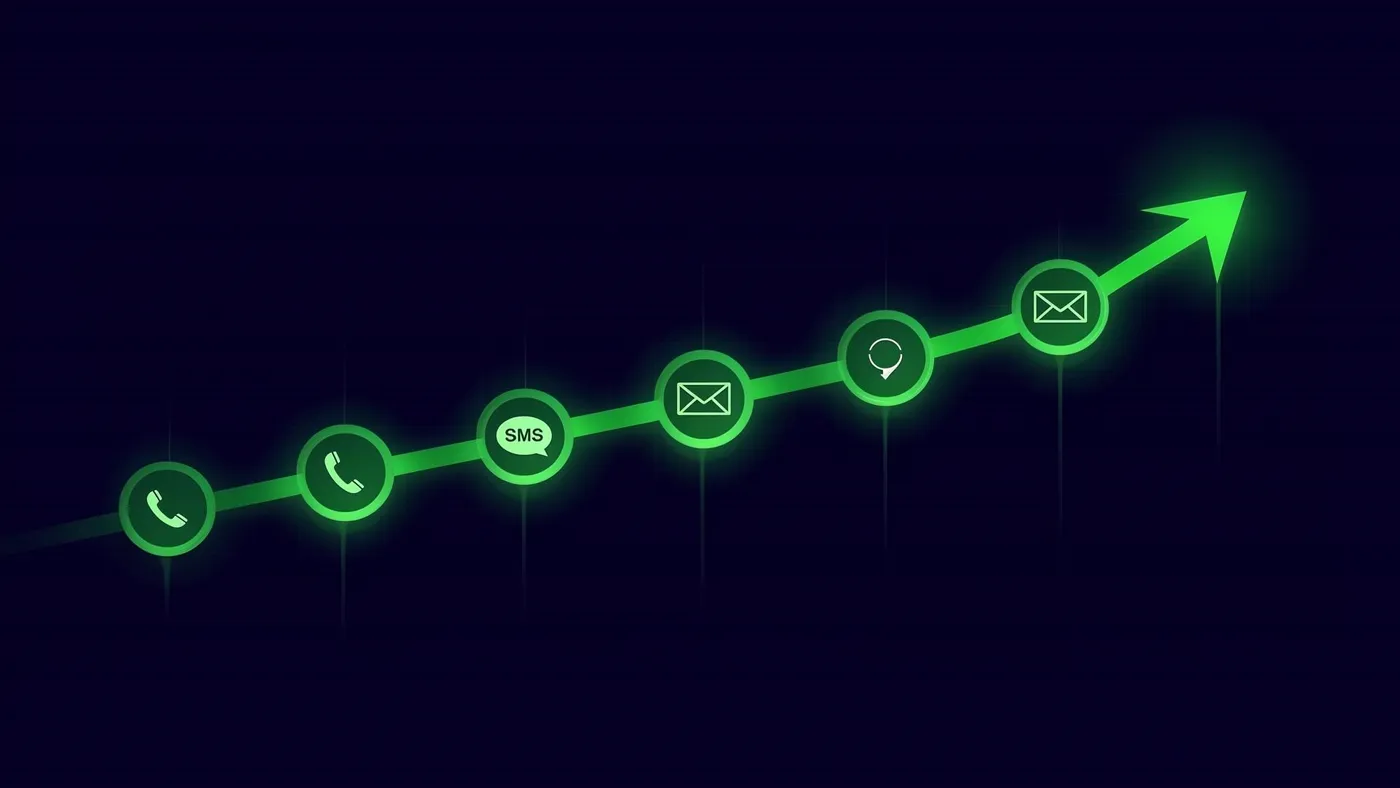
The Contact Timeline That Maximizes Reach
| # | Timing | Channel | Purpose |
|---|---|---|---|
| 1 | Minute 0–5 (fresh leads) | Phone | First contact attempt |
| 2 | Minute 5–15 | SMS | Immediate text if no answer |
| 3 | Hour 1–2 | Introduction and application link | |
| 4 | Day 1 afternoon | Phone | Second call attempt |
| 5 | Day 2 | SMS | Follow-up text |
| 6 | Day 4 | Value-add content or case study | |
| 7 | Day 7 | Phone | Final high-touch attempt |
| 8+ | Days 14, 21, 30 | Email / SMS | Nurture sequence |
Most deals that eventually close do so after the 4th–7th touchpoint. Brokers who give up after two attempts are leaving a significant portion of their funded deals on the table.
SMS Outreach in 2026: What You Need to Know
SMS has become the most important outreach channel in MCA lead generation, but it operates under stricter compliance requirements than most brokers realize. The A2P 10DLC framework requires that businesses register their messaging campaigns through a carrier registry before sending commercial SMS at scale. Unregistered campaigns are increasingly filtered or blocked entirely.
What you need to operate a compliant SMS outreach program:
- A2P 10DLC registration with your SMS provider
- Opt-out language in every outgoing message ("Reply STOP to opt out")
- Business registration connected to your EIN
- A vetted bulk SMS platform (not a personal cell phone)
The compliance overhead is modest but important. Brokers who run compliant SMS programs have material deliverability advantages over those who do not.
Organic and Content-Driven Lead Generation
Not every lead needs to be purchased. Content marketing and SEO are slower-building channels but produce leads with zero marginal acquisition cost once ranking is established.
Effective organic MCA lead content targets:
- Problem-aware searches: "emergency business funding", "how to get capital when bank says no"
- Product-specific searches: "merchant cash advance qualification requirements", "how long does MCA funding take"
- Vertical-specific searches: "MCA for restaurants", "trucking company business funding", "contractor working capital"
A blog with 10–20 well-targeted articles covering these queries will begin generating organic inquiries within 60–90 days of publishing and compound over time without ongoing cost. For MCA brokers who want to build a long-term business, content is one of the highest-ROI investments available.
The Renewal Pipeline: Your Lowest-Cost Lead Source
Every merchant you fund is a future renewal candidate. Yet many brokers treat the deal as complete once it funds and have no systematic process for tracking, timing, or approaching renewals.
A funded merchant who paid back their advance successfully is:
- Pre-qualified — you already have their documents and history
- Pre-sold — they have already used MCA and understand the product
- Low-cost — no lead acquisition cost whatsoever
- High-trust — if you handled the original deal well, they trust you
The broker who calls a merchant at 60% paydown with a clear, well-timed renewal offer is capturing value they already created. A structured renewal tracking system — even a simple CRM alert set when the advance reaches the 60–70% paid mark — can add a material second revenue stream to any existing operation.
Frequently Asked Questions
What is the fastest lead type to generate funded deals from?
Live transfers and fresh real-time applications produce the fastest conversion cycles because merchant intent is highest at the moment of inquiry. The tradeoff is cost — these are the most expensive lead types per unit. For new brokers, a mix of fresh leads with a small live transfer allocation provides the best learning environment while keeping cost manageable.
How long should I follow up on a lead before moving on?
Industry data consistently shows that most conversions happen between the 4th and 7th contact attempt. A minimum of 7 structured touchpoints over 14–21 days is the baseline. After that, move leads to a long-term nurture sequence rather than dropping them entirely — circumstances change, and a merchant who was not ready in January may be ready in April.
Is cold calling still effective in 2026?
Cold calling is harder than it was five years ago due to iOS spam filtering and call-blocking, but it remains effective for brokers with skilled teams and good data. The shift is that cold calling works best as part of a multi-channel sequence — phone + SMS + email — rather than as a standalone channel. Pure cold-call-only operations are increasingly challenged.
What industries convert best from MCA leads?
Restaurants, retail, trucking, construction, healthcare, and personal services (salons, gyms) remain the top-converting verticals for MCA. Restaurants and construction have the highest MCA usage rates. Vertical-specific targeting in lead data filters — filtering for SIC codes tied to target industries — significantly improves lead quality relative to generic business funding lists.
Published by MCA Broker Stack — the industry resource for MCA brokers and ISOs.